“Our life is what our thoughts make it“
Marcus Aurelius
We often create our own barriers through our thoughts:
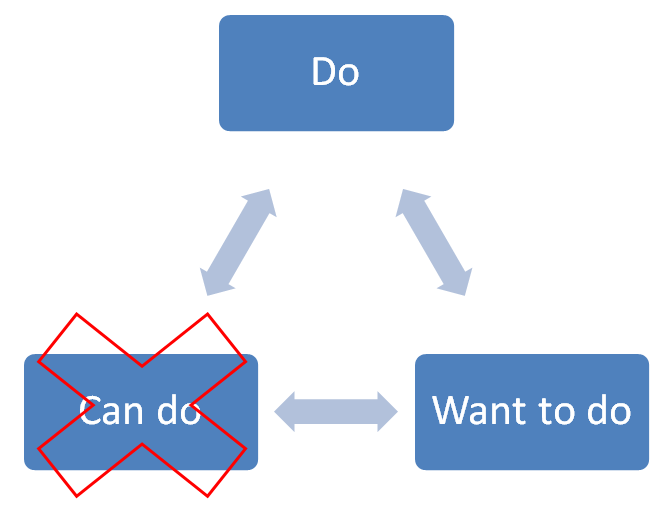
If we don’t think we can do something, even if we want to, that negative thinking subconsciously deters us from giving our best effort.
It is a self-fulfilling prophecy.
Evidence has shown that how much we believe the desired outcome is achievable and within our abilities is a strong predictor of the actual outcome. This is known as our level of self-efficacy.
Types of thoughts that may interfere with our efforts include:
- Rumination – when we focus on the same thing over and over again. For example, when we keep thinking about how much the pain hurts, or when the pain will come back. This type of thinking will keep triggering our pain alarm system.
- Magnification – when we distort the reality of a situation, making it worse than what an objective evaluation would show. This amplifies the signal as if using megaphone. For example, the pain makes it hard to get out of bed in the morning, which may extend to a thought of it impeding the whole day’s activity. With that, the pain persists or is felt more intensely.
- Catastrophization – this type of thinking has been linked to the worst outcomes for chronic pain. One thought leads into the next, sequentially becoming worse, until you arrive at the worst-case scenario. An example of catastrophization with chronic pain: I am in pain -> my pain is constant -> I won’t get better -> I should stop anything that causes me more pain. In our movement and pain section, we see the detriment this kind of attitude brings. Less movement produces more pain!
To rewire our thinking process, the best way to start is to just DO the activity we desire. The more feedback we get, the more we can adapt and figure out how to make the activity more tolerable. It is easier to make a behavioural change than a mental change. Taking a mindfulness approach is important. Let go of any expectation, and be open to the possibility of any outcome. Try to not judge that outcome as ‘good’ or ‘bad’, and accept it for what it is. Remember that this outcome can improve with repetition.
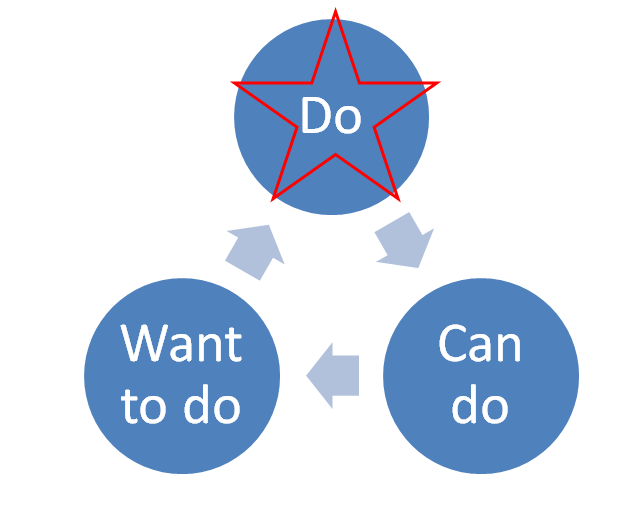
As we see our abilities improving, it motivates us to continue.
The increased level of confidence alone will help manage the pain, by shifting attention to a value-centred goal.
Another strategy to rewire the brain is to reframe how we talk to ourselves. Instead of asking questions about pain such as:
- what it feels like
- how intense is it
- or where it is
Try thinking about when the pain feels better or worse:
- what we are doing
- who are we with
- what time of day is it
- where are we
By finding patterns to pain, activity can be maximized, and thus pain would be better managed. Other helpful questions to ask ourselves include: “If I wasn’t in pain, what would I feel instead? If I felt this way, what would I like to do?” This helps guide value-centred goals, which help to steer initiative to improve activity levels.
The concept of rewiring the brain is known as neuroplasticity. Practicing a change in our thought process can actually change the neural circuitry, and thus how the brain processes signals from the body!
Emotions are a result of our thoughts. The more positive our thinking, the more positive our emotions. Our affect – or displayed emotional state (using words, tone of voice, body language, gesture) – is highly correlated to chronic pain, as well as other chronic diseases.
| POSITIVE AFFECT | NEGATIVE AFFECT | |
| EXAMPLES | Joy Gratitude Happiness Alertness Hope Pride Love Peace Inspired Engaged Satisfied | Anger Fear Nervousness Guilt Disgust Sadness Loneliness Stressed Helpless Frustrated Worried |
| EFFECT | – More likely to access positive memories – Improved flexibility, efficiency, innovation & thoroughness in thought process – Improved creativity in problem solving – More open-mindedness about thought-action results | – Prepares us for threat – Narrows perceptual focus – Prepares specific responses – heightens stress response -> leads to low mood long-term |
By eliciting positive emotions, it leads us to play more, explore, and seek out social connections. When improving our social connections, our mood improves, and pain is better managed. To learn about social connection and pain, click here.
Positive affect has been shown to decrease risk of illness, and increase life expectancy, acting as a protective mechanism for the immune system.

As exemplified above, reframing our thoughts is one way to improve our emotions. Another way is to increase cardiovascular exercise, which has non-physical benefits such as improving mood and encouraging prosocial behaviours. To learn about movement and pain, click here.
Finally, adopting a mindfulness lens can enhance positive affect. Using a beginner’s mind and not having expectations of outcome, being in the present moment and not worrying about the past or future, not judging experiences as ‘good’ or ‘bad’ and accepting it for what it is, and expressing gratitude regularly are all helpful in shifting from negative to positive emotions.

 Against All Pains