

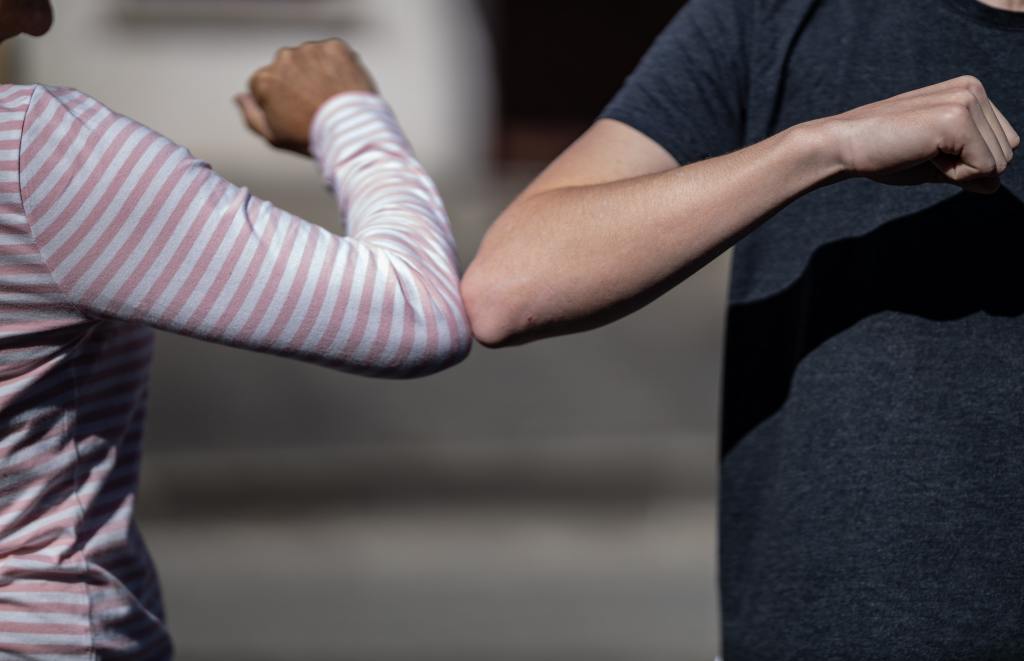
From connecting with loved ones, to chatting with peers or coworkers, to brief encounters with people in the neighbourhood, to even brief interactions with complete strangers – they all elicit a response in the body that can help with pain management. They do not have to be conversations – it can be as simple as a non-verbal acknowledgement, smile or wave.
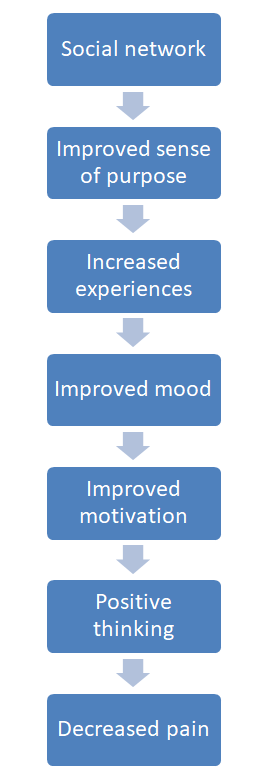
When we are a part of a social network, it provides us with a sense of purpose, increases our motivation and productivity, and results in improved self-efficacy. Self-efficacy refers to how confident we feel in our ability to achieve an outcome. Studies have shown that the more in control we feel, the better our outcomes with chronic pain.
Who is in our social network and how we communicate with each other are factors to consider. Are they enablers, who inhibit independence, or are they supporters, who facilitate recovery? The more supporters we have in our circle, the better our outcomes will be. Another factor to consider is how tightly knit the network is. The stronger the bonds, the better the outcomes.
Random acts of kindness facilitate social connection. Additionally, they have been shown to improve mood and lower blood pressure. Interestingly, recalling those random acts have been shown to provide similar benefit. When we are on the receiving end of such acts, it elicits gratitude. The “pay-it-forward” mentality is often triggered, thereby strengthening social interactions in a cyclical manner.

With our social network, we are more likely to have new experiences, learn and grow, stay motivated to reach goals, and have more joy and laughter in life, all of which will enhance our positive emotions, and influence our thoughts in a positive way. Positive thinking and positive affect help to manage pain.
 Against All Pains