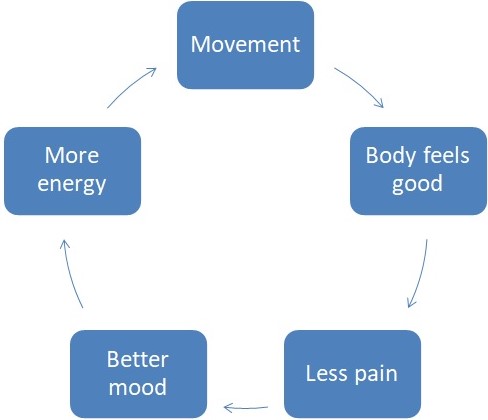
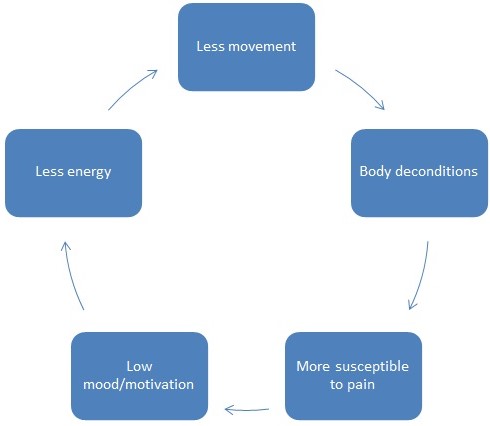
Pain and level of physical activity or movement are highly interconnected.
What we want
What often happens


There are many types of movement we incorporate into our day. It can be regular physical activities such as walking or doing stairs, or doing house chores that cause physical exertion like vacuuming, mopping, gardening, shoveling snow, or doing groceries. It can be more organized activities such as swimming, cycling, a planned walk, or playing sports.
All of these activities increase our moving time throughout the day.
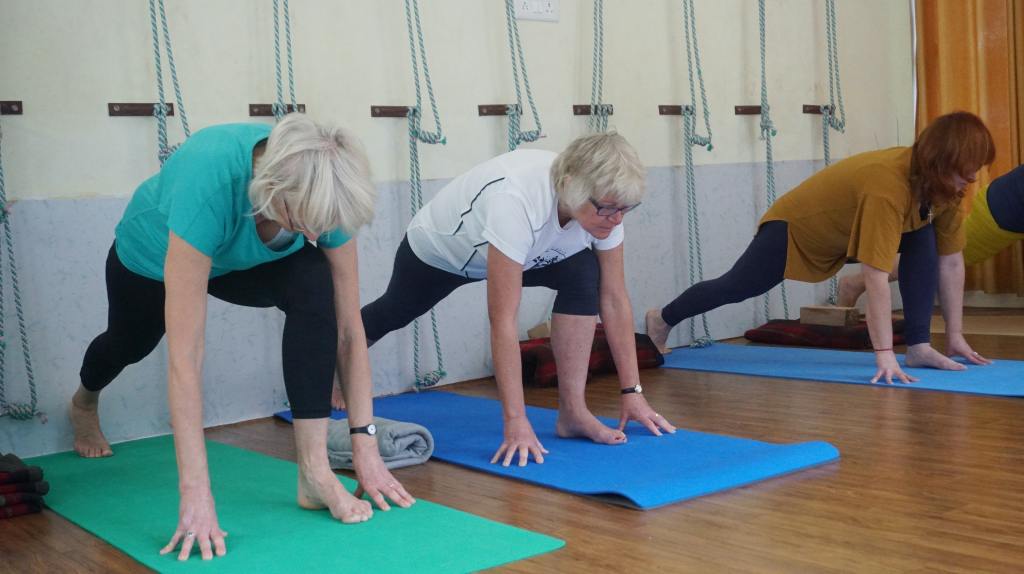


When it comes to pain, increasing moving time is the goal; however, cardiovascular exercise, or aerobic activity, has been shown to be the most beneficial. By getting our heart rate into an aerobic zone, it lowers our cortisol release which is a stress hormone, thus helping to manage our stress levels. It also triggers endorphin release, which is one of our naturally produced pain-killers! To find out more about how much movement is recommended, click here.


In addition to the physical benefits of exercise, there are many other advantages to keeping active. It boosts our mood, energy levels, makes our brain more sensitive to joy and pleasure, improves motivation levels, calms our sympathetic nervous system thereby decreasing stress responses, improves self-image, and improves belief in our own abilities. With all of these added benefits, it improves our function and quality of life!
 Against All Pains