Catastrophization is the most evidence-based type of unhelpful thinking linked to chronic pain. Reframing the thought to gain perspective is a very useful technique to change it.
Some guidance on thought reframing for catastrophization:
Play the Judge
- What thought just passed through?
- Is it true? What evidence is there to support it?
- Is it untrue? What evidence is there to support it?
- Can I know this is absolutely true?
- What alternative thoughts can there be?

“Decatastrophize”

*being prepared for a threat can decrease sensitivity
*looking at the scenario as someone removed from the situation helps broaden possibilities
- What thought just passed through?
- How awful would it be if this was true? (0-100%)
- How likely is this to come true?
- If it did come true, how would I cope?
- If a friend or loved one was in this same situation, what would you tell them?
- What positive and reassuring thing do you want to say for yourself about the catastrophe now?
- How awful would it be if the catastrophe came true? (0-100%)
Turn Around the Thought
- What thought just passed through?
- Put the opposite thought in your head – how does it make you feel?
- How can you soften the thought or change it to make it encompass more possibility?
There are many other types of unhelpful thinking that can also make us more sensitive to pain. To learn more about them, and to walk you through a mindful reframing, check out the document below:
More information can be found here
Sometimes, it is easier to deal with our negative thoughts by remembering that whatever we are going through, there are many other people who also suffer, have struggles, or even face similar circumstances. We are not alone. This approach is one of the components of self-compassion.
Practicing self-compassion can also help to reframe our thoughts. It uses a mindful approach to be kinder to yourself, and realize the power of common humanity to soften how we feel about it. We reframe our own inner critic in a more friendly and positive manner. For an example of how to practice, watch “Be kinder to yourself” here.
Positive affirmations are another great way to manage negative thoughts. They help to reprogram thinking patterns until eventually it changes our behaviour. It is important to repeat the affirmation regularly, and is best when setting a goal that can be visualized.

By changing our thoughts to be more positive, it can increase our self-efficacy. Self-efficacy refers to how much we believe in ourselves to control our own motivation and behaviour, usually in relation to achieving a goal. To rate your own self-efficacy, click here.
Other than changing our thoughts, we can also improve self-efficacy by:
- *doing – the more we see our results of our efforts, it positively reinforces us to continue and do better the next time
- *observing – when we see others do the same thing, it gives us confidence that we can do it too
- *learning – educating ourselves about the task can empower us and make us feel more influential over the outcome – the more we know, the better we do
Self-efficacy has been shown to provide the best outcomes for chronic pain!
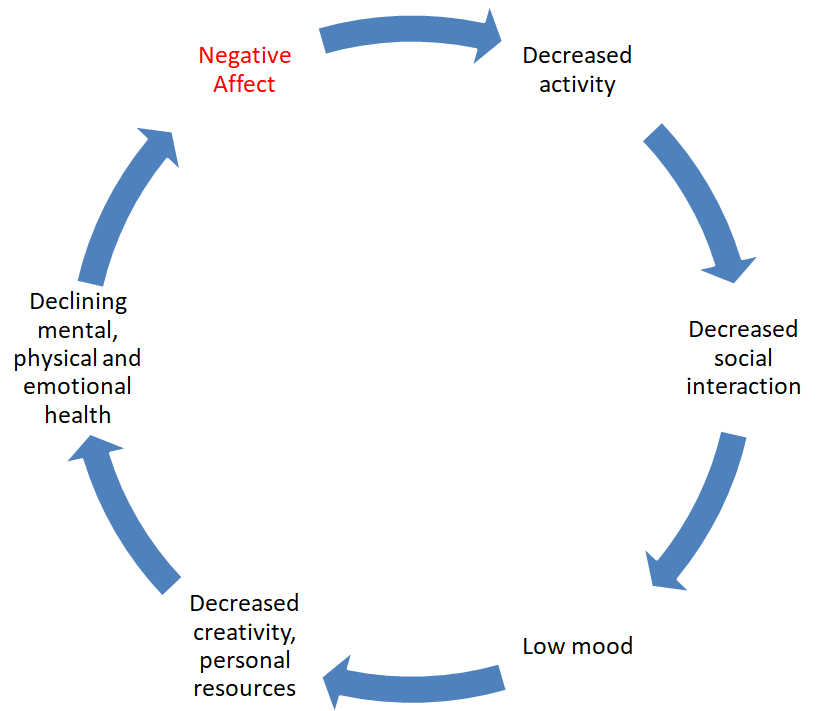
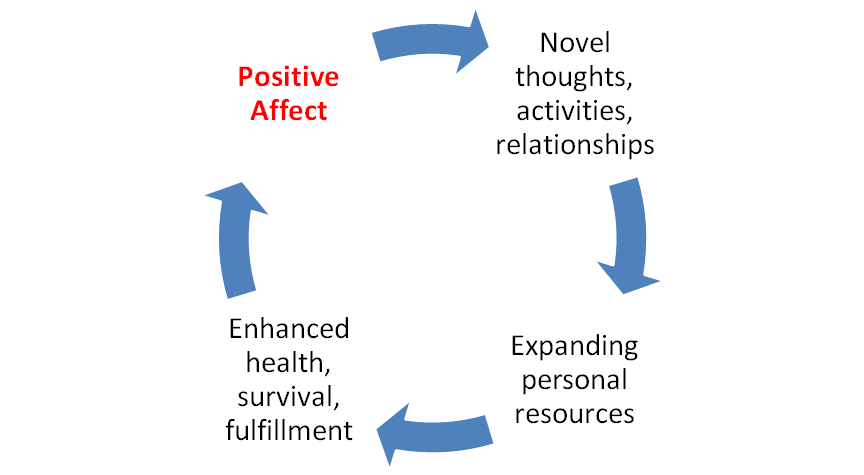
Sometimes it is hard to break the cycle of negative emotions. A practice that is very effective in facilitating the process of transitioning from negative affect to positive affect is gratitude practices. There are various ways we can elicit gratitude:
- Journaling about what we are grateful for (e.g., jotting down 3 good things that happened, writing about what we appreciate in our lives) – the more specific and detailed, the better the effect
- Gratitude letter – thinking of someone you feel grateful for, and writing a letter to them to explain why you feel this way. Incorporate specific examples of what they may have done or said.
- Recall acts of kindness – remembering examples of when you did a good deed for someone else, and how it made you feel at the time, will often elicit gratitude. Recalling an act of kindness you received can also express the same sentiment.
Other Resources
- The happy secret to better work – https://www.youtube.com/watch?v=fLJsdqxnZb0
- “Self-efficacy is more important than fear of movement in mediating the relationship between pain and disability in chronic low back pain” – European Journal of Pain (2011) https://www.researchgate.net/publication/45286191_Self-efficacy_is_more_important_than_fear_of_movement_in_mediating_the_relationship_between_pain_and_disability_in_chronic_low_back_pain
- Catastrophization, depression and pain-related disability (2011) https://www.sciencedirect.com/science/article/abs/pii/S0163834311000065
- Pain, catastrophization, and depression in the rheumatic diseases (2011) https://www.nature.com/articles/nrrheum.2011.2?utm_medium=affiliate&utm_source=commission_junction&utm_campaign=3_nsn6445_deeplink_PID100090071&utm_content=deeplink
- How anxiety hides in your habits: https://greatergood.berkeley.edu/article/item/how_anxiety_hides_in_your_habits?utm_source=Greater+Good+Science+Center&utm_campaign=3f62c1bb88-EMAIL_CAMPAIGN_GG_Newsletter_March_11_2021&utm_medium=email&utm_term=0_5ae73e326e-3f62c1bb88-74369575
- Rewiring the anxious brain: https://www.youtube.com/watch?v=zTuX_ShUrw0
- Rewiring the anxious brain, pt. 2: https://www.youtube.com/watch?v=Fb-clvcX7fI
- Neurodharma: New Science, Ancient Wisdom, and Seven Practices of the Highest Happiness, by Rick Hanson – written by a psychologist, he identifies 7 qualities that produce highest happiness and well-being: a steady mind, a warm heart, equanimity, self-acceptance, being present, feelings of connection to the greater universe, and sense of timelessness; focused on how to “grow the good” in ourselves
- An Experiment of Gratitude – https://www.youtube.com/watch?v=oHv6vTKD6lg
- “Coping Style as a Psychological Resource of Grateful People” (2007) https://www.researchgate.net/publication/255605326_Coping_Style_as_a_Psychological_Resource_of_Grateful_People
- What teens are thankful for – https://www.youtube.com/watch?time_continue=3&v=aqLXGiqT2ZE&feature=emb_logo&utm_source=Greater+Good+Science+Center&utm_campaign=4e8b7215bb-EMAIL_CAMPAIGN_GG_Newsletter_Nov_19_2019&utm_medium=email&utm_term=0_5ae73e326e-4e8b7215bb-74369575
 Against All Pains