There are countless things that can cause us stress, from the time we are born until the day we pass on. As children, we get stressed about if other children will like us, or if our parents will remember to pick us up. As adolescents, we stress out about buying the right things to fit in so we’d get invited to the most popular parties. We move on to adulthood and wonder how we will make a living, and envision what kind of relationships we want to have. Parents worry about their kids, no matter how old they are. And the golden years we are concerned about having our affairs in order. Clearly stress is unavoidable, so it must serve us a purpose.
We have different types of systems that respond to our level of stress: sympathetic nervous system and parasympathetic nervous system. The heightened stress response will activate the sympathetic nervous system. Our body goes into “fight, flight or fright” response, so it decreases salivation and non-essentials for survival like the hunger signal, and increases responses needed for our survival such as increased heart rate, blood flow, and …
In contrast, a calming response activates the parasympathetic nervous system. That allows our bodies to digest food, increase salivation, lower our heart rate and blood flow.
It would make sense that stress triggers a survival response in order for it to be beneficial.

Interestingly, oxytocin is both a stress response and provides a calming effect. It encourages us to connect socially with others, which can result in positive emotions such as gratitude, happiness, and pleasure.
So the question becomes, why does stress increase pain? The real issue is longstanding unmanaged stress. If the sympathetic nervous system is constantly ringing, many stress hormones are flooding our system, including cortisol. If this response is triggered frequently, it becomes more easily activated over time. It leads to decreased emotional regulation, difficulty sleeping, low energy, cognitive difficulty, and even makes our body more sensitive. This can result in more pain, or pain that is more easily triggered. The body doesn’t have time to relax, unwind, and heal.
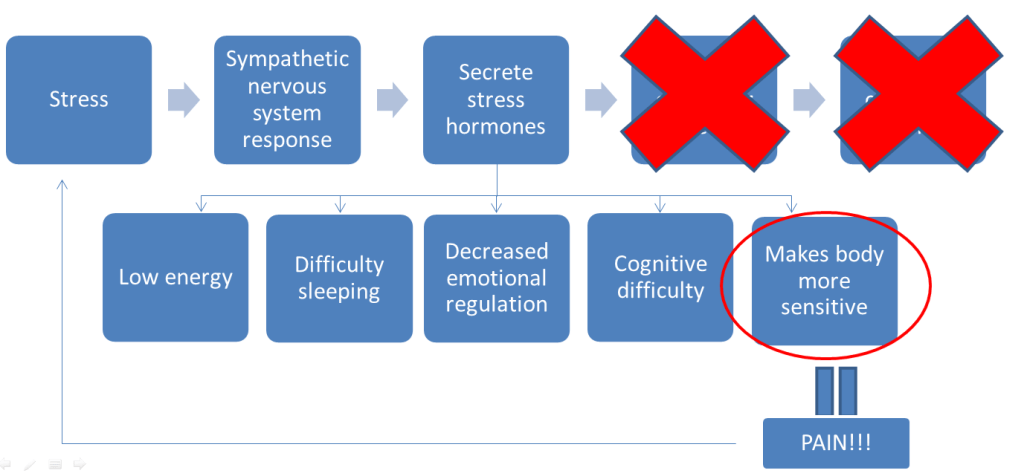
Learning about strategies to manage stress is essential to managing chronic pain. If we perceive our stress response as helpful instead of harmful, it would decrease our sympathetic nervous system response, and result in higher pain thresholds. In fact, it has been shown that people who manage stress more healthily have a lower risk of dying, when compared to those who do not manage it well. This is independent of level of stress experienced, meaning that someone who experiences high levels of stress but manage it well have a lower risk of dying than someone who experiences little stress but does not manage it well.
The most effective starting point is to change our thoughts. Our body responds to stress in a way to prepare us for action, better perform and be more confident in the situation – so really, it is like our friend! We should live a life of meaning instead of looking for the path of least resistance, remember that stress is normal and everyone experiences it, and to trust our body’s response to the stress. By focusing on something of value, no matter the stressors that come, we will find more pleasure and joy, which in turn helps protect our body from negative effects of stress!
Think of it like pain – we have learned that pain is a danger signal and not a harmful signal. Likewise, think of stress as a friendly signal to let you know you may need to seek out help, or have more time for self-care.
Using mindfulness techniques is a healthy way to approach stress management.
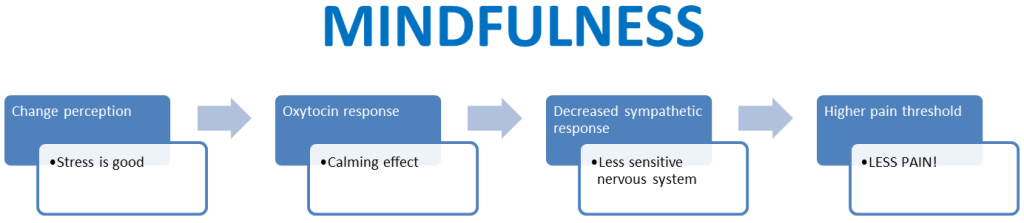
When we start in the mind, our body reacts in turn. Mindfulness-based practices are good ways to reframe our thoughts.
Other Resources
- How to make stress your friend – https://www.ted.com/talks/kelly_mcgonigal_how_to_make_stress_your_friend?language=en
- 90:10 The Single Most Important Thing You Can Do For Your Stress – https://www.youtube.com/watch?v=I6402QJp52M
 Against All Pains