Chronic pain oftentimes makes us feel isolated and alone. We feel like no one understands our suffering. We may feel like we are a special case. What we know to be true is that pain is a subjective measure – only we can know what our pain feels like, since it is our experience. However, when we practice self-compassion, we realize the common humanity in our experience.
- Everyone feels pain.
- Everyone suffers.
- Everyone has their own challenges.
- Everyone has their own personal story.
Yes, no one can feel our pain as we feel it, but it doesn’t mean we are alone. When we connect to the idea that there are countless other people feeling their pain as well, it helps us to normalize the experience. Our nervous system will start to see it as less of a threat over time.
In relation to common humanity, it has been shown that exercising in a group setting has benefits such as sustaining motivation, keeping on track with goals, and increasing pleasure found in the activity!

Laughter has been shown to:
- Release endorphins – our body’s natural pain killers
- Relax the physical body – decreases tension
- Relax the mind – produces calming effect
- Boost the immune system – decreases stress hormone release & increases immune cells
- Protect the heart – improves function of blood vessels and increases blood flow
Thus, laughter has a protective mechanism against pain.

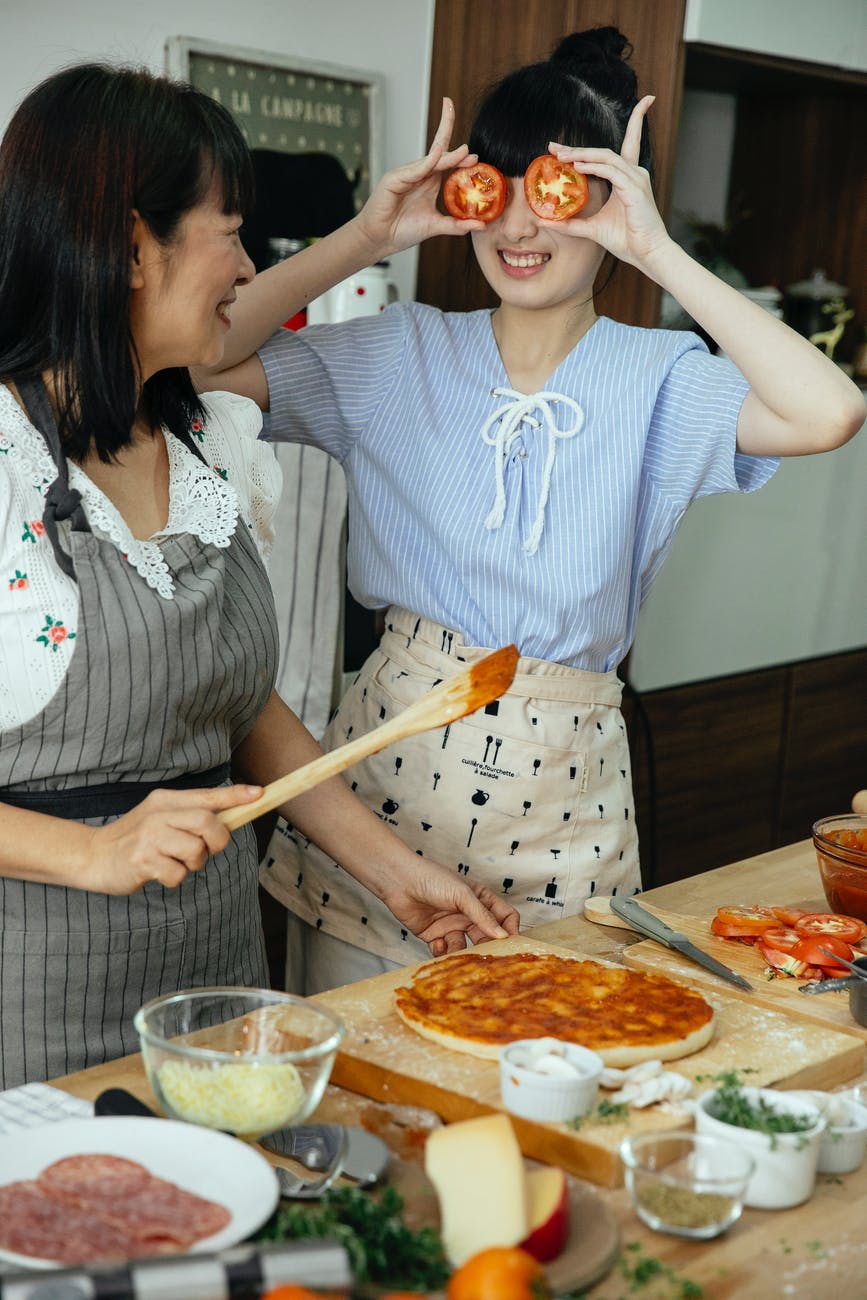
Social laughter has a stronger effect on pain management than laughing alone. This is because it serves multiple purposes for social connection:
- Helps bond with people we aren’t as familiar with (even strangers)
- Expresses our happiness in the presence of others
- Enhances teamwork
- Promotes group bonding
- Strengthens relationships
- Acts as a gateway to harder conversations
- Diffuses conflict
- Leads to forgiveness
Increasing social connection in this way can change how our brain perceives pain, and the coping mechanisms at our disposal. The endorphin release not only helps to manage pain, but also leads to a state of calmness and amusement. These impacts allow us to be more creative, explore, and be open to new activities. Therefore, laughter makes us more social!


The type of social circle we keep can influence pain. There are supporters and enablers.
| ENABLER | SUPPORTER |
| creates conditions where you inhibit progress and/or prevent progress | creates conditions to help you manage symptoms and/or progress with function |
It is through their actions and words that help you identify who is helping you versus harming your recovery. An enabler is often overprotective and results in discouraging your independence. An enabler allows you to try the activity yourself, while assisting you where needed.
Let’s look at some examples of a 70-year-old woman who suffers from chronic pain. Over the last couple years, she has been doing less and less of her basic daily activities, to the point where she has a personal support worker coming in 3 days a week to help with meals, showering, cleaning, and laundry. Although her pain is now all over her body, she is able to independently get in and out of bed, on and off a chair/toilet, and walk without gait aids.
| Goal | Actions | Words | Type |
| Showering self | Helps her in and out of shower, helps scrub her down | Let me help you – the shower can be slippery and you may fall | Enabler |
| Sets up non-slip mat, grab bars for shower, is nearby to help | Safety measures are in place – why don’t you try the shower, and call for help if you need me | Supporter | |
| Preparing eggs and toast | Does the groceries, turns on stove, cracks egg onto heated pan, puts in toast | Let me help you – I don’t want you to burn yourself | Enabler |
| Does the groceries, reviews kitchen safety with stove and toaster | The eggs and toast are in the fridge, be carful because I do not want you to burn yourself, call me if you need help | Supporter |
The more supporters we have, the better our outcomes will be. It can be challenging to communicate with an enabler when we identify that they may be harming our progress, as we know they are acting from a caring space. Active listening can be a strategy to understand their perspective, and we may be better able to articulate how their experience impacts us in a constructive manner afterwards.

In active listening, we are being in the present moment during the conversation, with attentive body language if they can see us. We listen to their whole story without interruption. We may repeat their points to exhibit our understanding, or ask questions to show genuine interest.
Avoiding any sort of judgment is important, so they are free to express their thoughts. Empathy is another component of active listening. Even though you are the one experiencing the pain, it is important to acknowledge the difficulty a loved one may experience as well. Once you acknowledge and validate their feelings, you can respond more appropriately about wanting their support to achieve your goals, and how they can better facilitate that.
Active listening is a great way to strengthen your relationships.
Other Resources
- Together: The Healing Power of Human Connection in a Sometimes Lonely World, by Vivek Murthy (2020) – written by a physician, talks about how loneliness and unwanted isolation hurts happiness and health, discusses how to combat loneliness with social connection
- It’s surprisingly nice to hear you: Misunderstanding the impact of communication media can lead to suboptimal choices of how to connect with others (2020) – https://psycnet.apa.org/record/2020-64844-001
- Loving-kindness meditation for common humanity – https://ggia.berkeley.edu/practice/loving_kindness_meditation
- What makes us happier than money? – https://www.youtube.com/watch?v=foqi_S-6XPo
 Against All Pains