We have learned that pain is not necessarily bad. It is a signal your brain sends to identify potential threats.
Oftentimes, when we are in pain, we do not want to move. This gets us into an unwanted pain cycle:
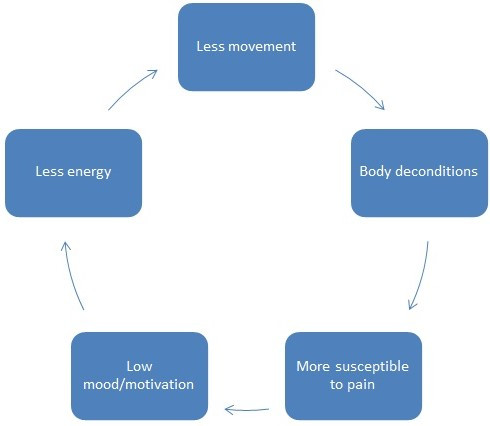
To break this cycle, the easiest thing to do is move! It is much easier to change our behaviour than it is to change our mindset. When we start to move, we get feedback immediately, and start thinking like this instead:
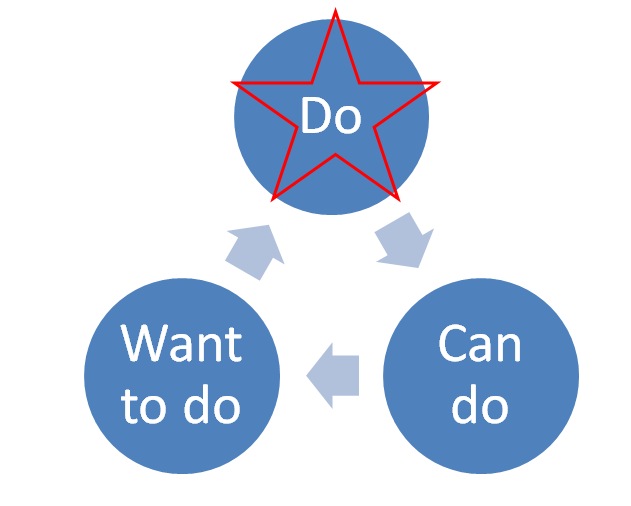
Of course, all of this is easier said than done. So how can we facilitate this change in behaviour?
A great strategy is to apply graded exposure. In relation to movement, this concept takes a larger functional goal, and breaks it down into smaller building blocks. We work on one block at a time, evaluating our response each time, before moving forward. Keep in mind that pain is expected in the short term, as we are retraining our entire system. In order to rewire our system and make it less sensitive, we need to trigger that pain alarm and then show our brains that the stimulus isn’t a threat. Over time, the alarm system will be less and less sensitive to the activity.
To illustrate graded exposure, let’s use an example:

- SMART goal: To be able to walk 400m outside on flat pavement using a 4-wheeled walker (4WW) in 6 months.
- Baseline: ambulatory indoors using 2-wheeled walker (2WW), ambulatory outdoors from porch to car on driveway using 2-wheeled walker
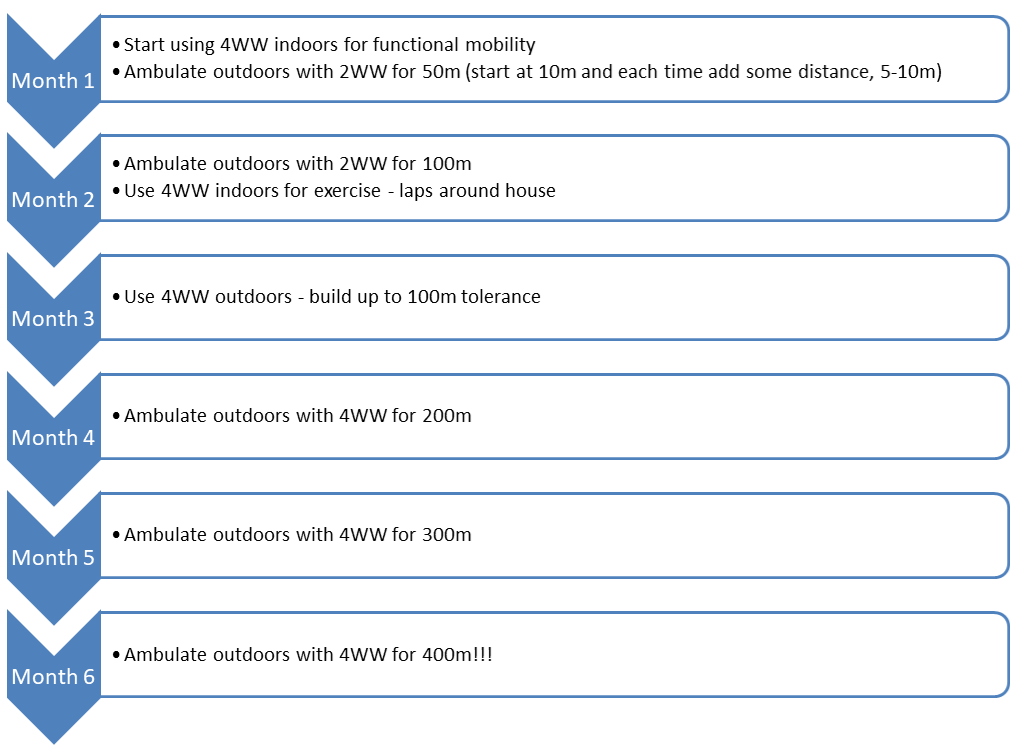
An important feature of graded exposure is regularity. For best results, work on the building block at least 3 days a week. Remember to evaluate how your body responds after each session – this is an ongoing process of review. If you are identifying tolerance issues, revisit your plan and modify it accordingly. Perhaps even changing one of your parameters of the SMART goal is in order. Do not be afraid to be fluid with the process.
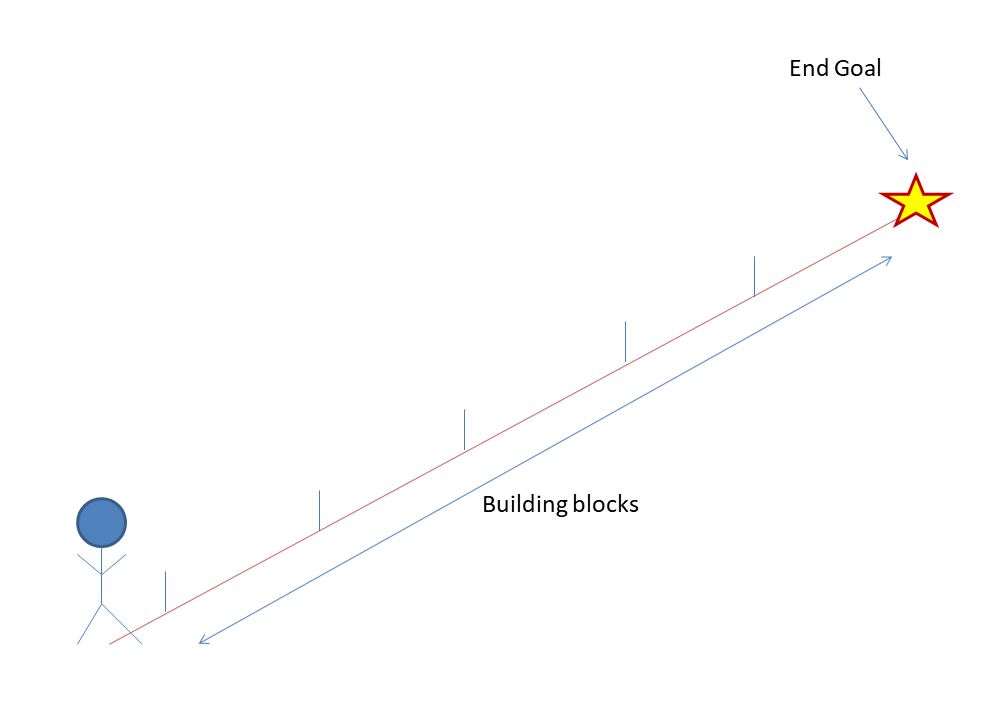
A lot of people fear movement because they do not want to suffer from the pain. You might be thinking, “What if my building block was too large and my pain is too much?”
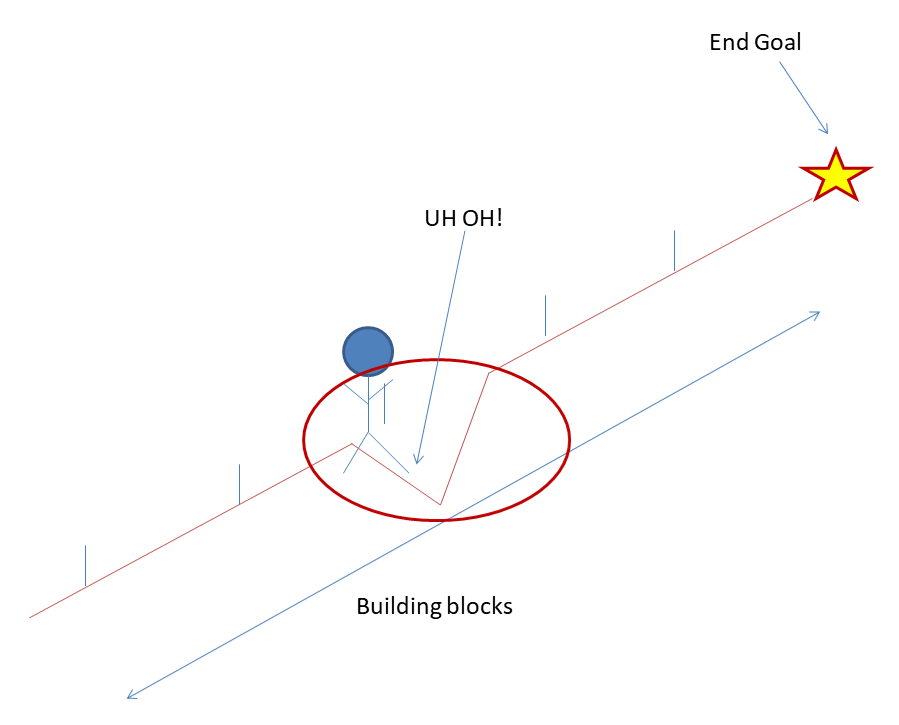
To help ease your mind, consider developing a flare up plan before embarking on the journey. This is a system in place to help manage pain if it is triggered by the activity. Keep in mind that chronic pain is a result of a sensitive nervous system, so harmless signals will trigger it. Therefore, it is normal to feel some level of pain or discomfort during this journey.
A flare up plan can consist of any management strategy you have found helpful for your pain, including but not limited to:
- Medication
- Temporary rest
- Ice
- Heat
- Therapeutic exercises
- Stretches
- Topical creams
- TENS machine
Once the pain is better managed, it is time to resume your plan! You may wish to modify it or start at a lower building block and work your way up again.
Now, you may be thinking, “How much pain is too much pain?” Every individual is different, since we know that pain is a subjective symptom, but a general guideline is to ensure your pain stays in the low range. Using the 0-10 pain scale, where 0= no pain and 10 = worst pain imaginable, the low pain range is from 1-3/10. So when you evaluate how you feel after your session, see if the pain is resting at 3/10 or below. If it is, you were working in a good range. If it is higher than 3/10, you may want to modify the building block temporarily. It is good practice to also evaluate how you feel the day after your activity, as sometimes there is a delayed onset of symptoms.
Another strategy to increase activity is to use novel movement. This helps to strengthen the mind to body connection in a manner that won’t be detected as a threat by the brain, since the brain would not have any expectation about the result of the movement. therefore, the pain alarm system will not ring. To make this approach effective, it is imperative to go into the activity with a mindful approach – be open to the experience, be present in the moment to understand what your body is feeling, and most importantly, do not have any thought that it will cause pain! Gentle novel movements such as a Qi Gong practice is a good place to start. In fact, given that it is a mindful movement sequence rooted in the breath, it has been shown to evoke a relaxation response!

Hopefully you are now ready to commit to a plan of ensuring you are getting enough movement throughout your day, and working towards a meaningful goal that would improve your quality of life!
Other Resources
- Why does Exercise work? -https://rookshealthpodcast.buzzsprout.com/1062967/6754246-why-does-movement-and-exercise-work-with-ann-gates?utm_source=newsletters&utm_medium=email&utm_campaign=ttt-issue4-22dec2020
- 24 Hour Fitness – 23 and 1/2 hours – https://www.youtube.com/watch?v=3F5Sly9JQao
- 23 and 1/2 hours: What is the single best thing we can do for our health? – https://www.youtube.com/watch?v=aUaInS6HIGo
 Against All Pains