If I asked “what is your end goal?”, most people with chronic pain would say, “to have no pain”, or a variation of the sort. I shouldn’t be surprised. Yet I’d challenge those with chronic pain to look beyond the pain. A meaningful outcome, or mark of success, from practicing management strategies for pain isn’t so much the pain itself, but how the quality of life improves.
Instead of asking you “what is your end goal?”, I ask:
“If you were not experiencing so much pain, what would you do?”
It is much more motivating to have a functional goal– an activity you want to see a difference in, that would provide your life with more meaning.


By goal setting, we can shift the attention away from getting rid of the pain and onto taking action with the pain. We are being mindful – becoming one with the pain, not avoiding it, nor avoiding activity because of it.
It is most effective when you have a long-term goal, and some short-term goals related to it. Make it SMART – specific, measurable, attainable, realistic, and timely.
Imagine a 60 year old male who played soccer competitively in 20’s and 30’s, high level recreational since, until back issues at 50, and torn ACL at 56. Since, has done extensive rehabilitation. Currently, golfs, walks, cycles, kicks the ball around in local field. He has hung up his cleats since the ACL injury 4 years ago. He has recently been looking into picking up an instrument, though he has never played one in his life.

| Value | Not SMART goal | Issue |
| Health | To be able to play soccer game in 1 month | Not specific or realistic |
| Family | To be able to play a friendly soccer game with the kids | Not realistic or timely |
| Arts (Music) | To be able to play a song on the guitar | Not specific, measurable, attainable, realistic, or timely! |
Let’s try fixing up his goals to be “SMART-er”:
| Value | SMART Goal | How? |
| Health | To be able to play a recreational soccer game with 55+ men’s league in 1 year | S: One 55+ men’s league recreational game M: By length of the game and he is able to play from start to end A/R: Yes – given previous soccer playing days, still active present-day, had rehab for prior injuries T: Given 1 year timeframe |
| Family | To be able to kick the soccer ball around with the kids in the yard in 1 month | S: Simple kicking of the soccer ball with kids M: If able to maintain easy soccer drills like passing, shooting, receiving A/R: Yes – has been kicking ball around in field still, active lifestyle maintains some conditioning/strength T: Given 1 month timeframe |
| Arts (Music) | To be able to play the song “Twinkle Twinkle Little Star” using notes (not chords) on an acoustic guitar in 2 weeks | S: “Twinkle Twinkle Little Star” on acoustic guitar M: If able to play the song note by note from start to finish A/R: Yes – Simple song, once has guitar, needs only handful of notes – can do without knowing how to read the music sheets, if practice daily should be attainable T: Given 2 week timeframe |
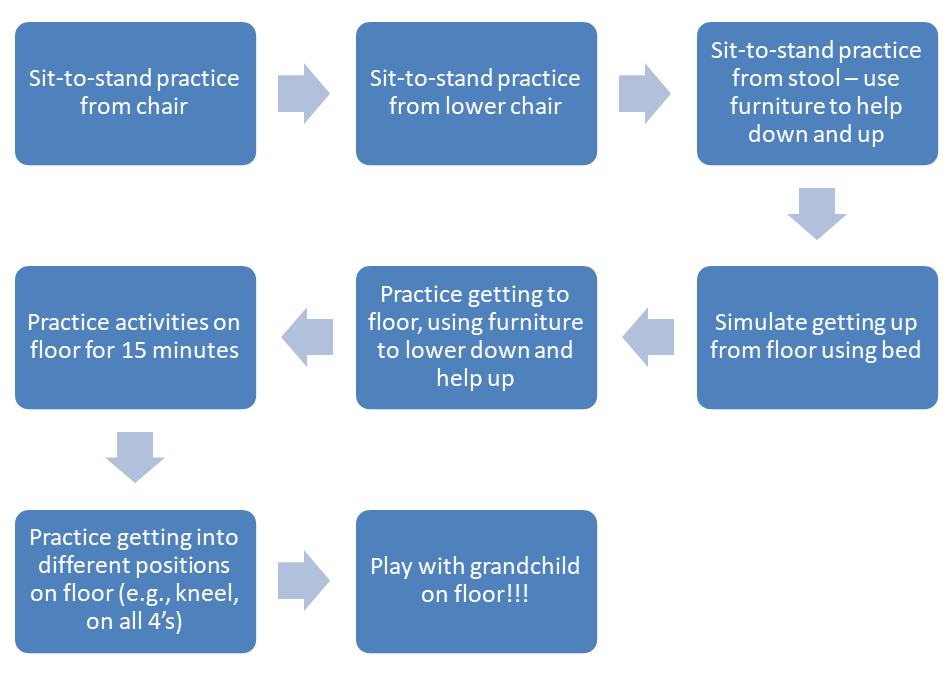
A concept called graded exposure can help you attain your goals while managing pain. You break the goal down into step-wise progressions, helping the body accommodate to the novel stimuli, and slowly adding more and more of it. Over time, those DIMS become SIMS, and the pain alarm system is less sensitive with the input. It is important to add stimuli slowly, and evaluate pain throughout the progressions. Typically you don’t want to have more than mild pain along the way.
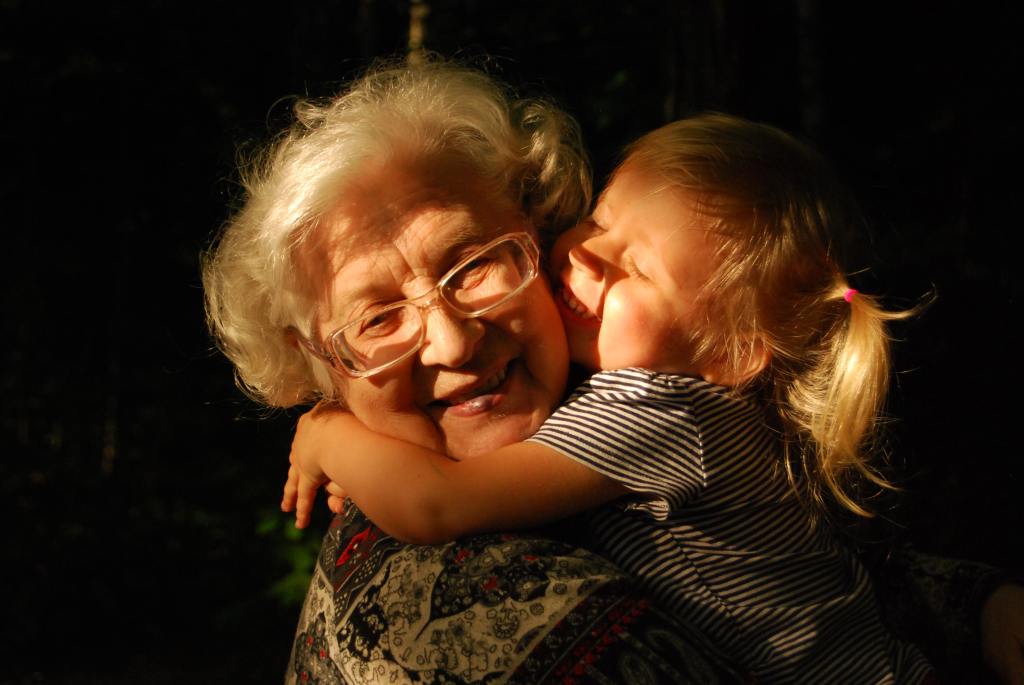
Let’s use an example to illustrate graded exposure. Suppose a grandmother wants to be able to play with her grandchild on the floor. Her functional goal is to be able to play at floor level. This goal is tied to her value of family and quality time.
Hopefully you are now inspired to make your own goal of value. Pain leads to suffering. Fill in this blank with an activity:
“If I could ________, I would suffer less”.
Now you know what you really want to change – look beyond the pain!
Other Resources
- Time Smart: How to Reclaim Your Time and Live a Happier Life, by Ashley Whillans (2020) – discusses how we would be happier and healthier if we valued time more, goes over “time traps” and provides advice on how to be “time smart”
 Against All Pains