Pelvic Pain
Pain can be felt anywhere in our body – head to toe, and everywhere in between. Just like any other pain, pelvic pain can be acute or chronic, and can be influenced by many factors. So why focus on pelvic pain?
First, let’s explore what the pelvic floor is all about. At the base of the pelvis are a group of muscles that sit like a hammock.

These muscles move up and down by contracting and relaxing. They support all the structures that sit above. In females, there are 3 structures that pierce through the muscles – the urethra, vagina and anus. In males, the urethra and anus will exit through this area as well. Pelvic floor muscles are often underappreciated, as their function is quite automatic.
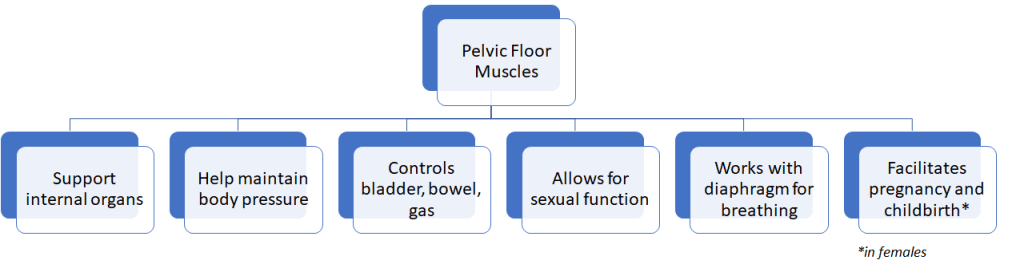
The focus of pain in the pelvic region is very important as it illustrates how strong the mind-body connection really is, thus proving why a biopsychosocial approach to pain management is needed.

To relate to this idea better, let us try an experiment. Put on a horror film or a video clip that makes you scared. Pay attention to how your body reacts. What is the first thing you notice? Where is your tension held? What are your pelvic floor muscles doing? By the end of the clip, evaluate how your whole body feels – scan the muscles from head to toe.
When we are scared, these emotions trigger the “fight-flight-or-fright” response. As a result, our pelvic floor muscles naturally tense up. This allows for us to respond appropriately to the situation. Blood is diverted to the muscles that will increase our chances of survival! Now imagine someone who is in a constant state of stress, worry or fear. These muscles will tend to stay tense, which may lead to persistent pain.
This state of “fight-flight-or-fright” leads blood away from the pelvic floor, which means the function of these muscles are not vital to our survival when we are under threat. As we saw above, the pelvic floor muscles are a support structure that also facilitates the action of the urethra, vagina, and anus. So exactly what kind of pelvic floor issues can result from pain?
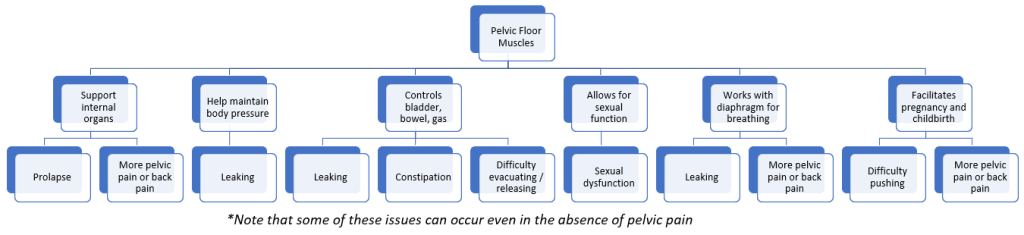
We discussed how pelvic pain highlights the importance of a biopsychosocial model of care. So how does everything tie together?
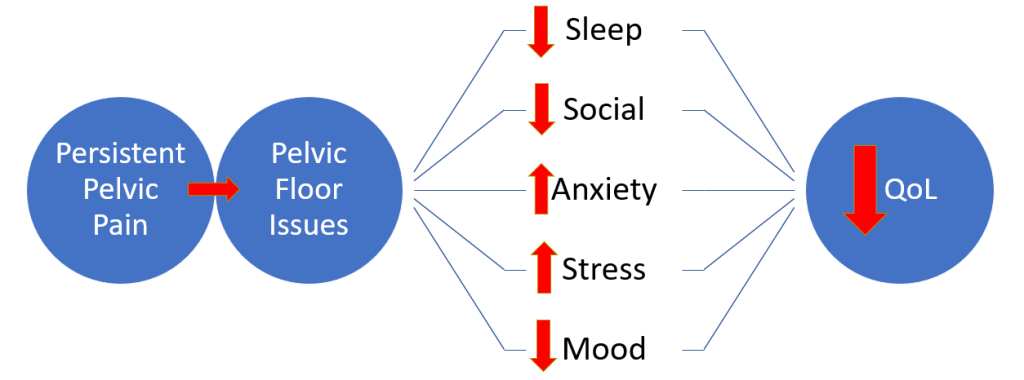
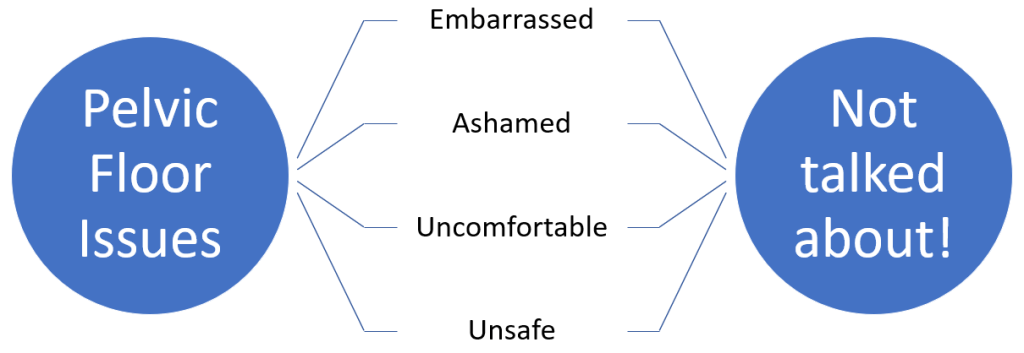
Not surprisingly, pelvic floor issues bring about a variety of unhelpful thoughts and emotions. This often deters people from talking about their issues, or they simply do not know where or how to start addressing the problem. We can understand how this lack of action can spiral down a cascade of factors that continue to amplify the situation at hand.
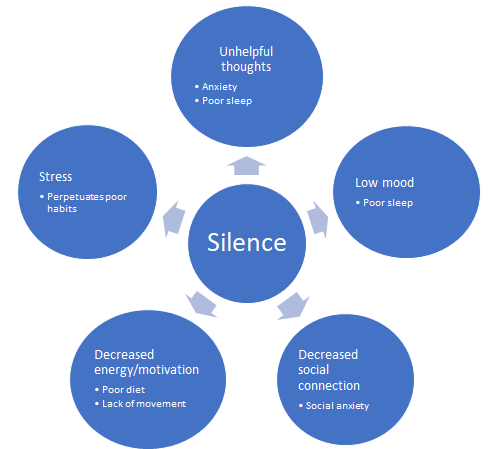
It is no surprise that persisting symptoms ultimately lead to a decreased quality of life! it is very difficult to break out of the pain or symptom cycle with pelvic pain because of how closely related the mind and body are!
If you’d like to explore pelvic pain further, click here.
Different models of managing pain
 Against All Pains