What do we know about pain?
- Pain is normal – it is a part of life
- Pain is an individual experience – everyone experiences pain in their own way
- Pain is measured subjectively – what is in the mind
- All pain is real, with or without a physical injury (e.g., think about the pain one can feel with heartbreak, or the loss of a loved one)
- Pain is a built-in alarm system for our body to warn us of actual or potential danger
- Pain does not mean there is tissue damage – tissues heal on their own, over time
- Many signals from the body are processed simultaneously in the brain, and the brain decides if it is pain, and how to react to it, driving our behaviour
- The threshold of pain can change because the brain is always changing (a concept referred to as neuroplasticity)
- Many factors affect the pain threshold, including but not limited to, previous injury, stress, thoughts, beliefs, emotions
- The pain threshold can be changed to be more sensitive or less sensitive
- To manage chronic pain, these factors must be addressed:
- stress levels and coping strategies
- sleep
- diet
- activity levels
- thoughts and emotions
- social connection
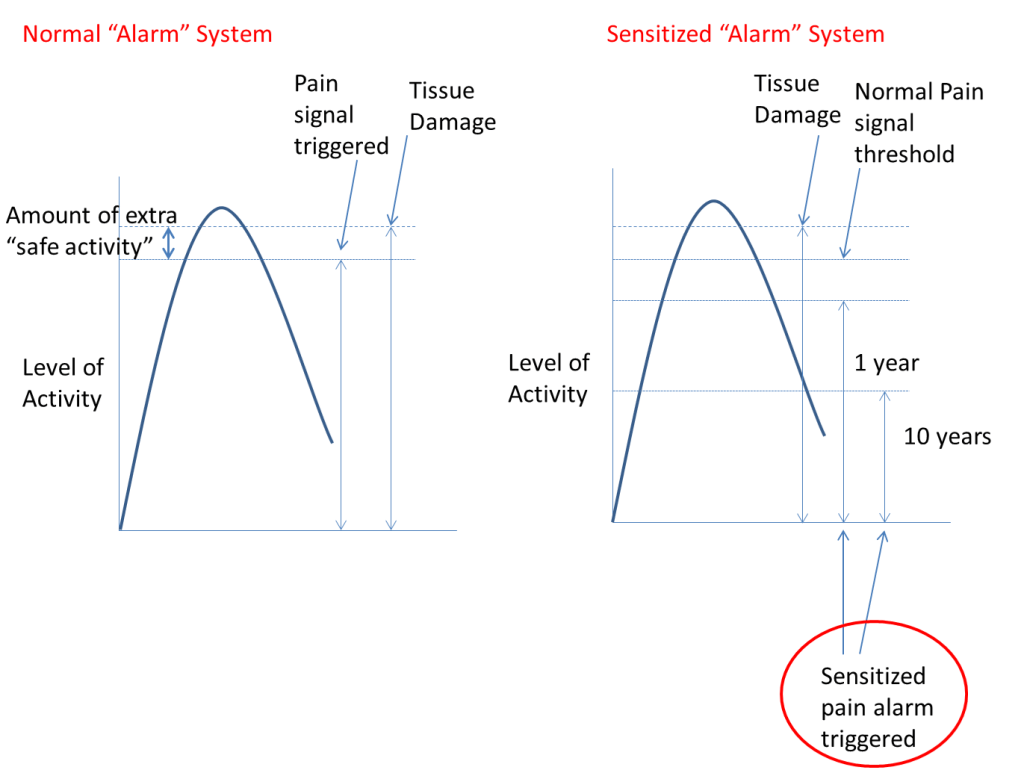
The above graphs depict how chronic pain leads to a decreased pain threshold over time. The longer pain persists, the lower the threshold becomes, so pain is felt more easily. The amount of activity tolerated decreases with this sensitized system as a result.
Different models of managing pain
 Against All Pains