Medications and Pain
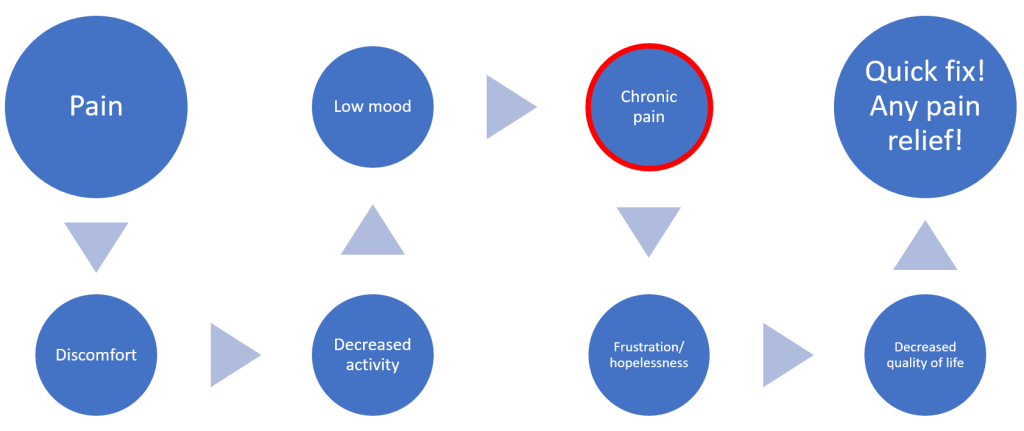
Chronic pain can benefit from medications for temporary pain relief, but without working on contributing factors to the pain itself, symptoms inevitably return. Over time, one may lose sight of what is contributing to their pain experience. That’s when seeking more drugs seems to be the only logical solution. This tunnel vision cascades into larger issues in the long run.
Since medications provide a simple and easy solution for pain relief, it is not uncommon to want to go down this route. However, long-term use can lead to tolerance, dependence, and addiction:
- Tolerance: the effects of the medication have plateaued as the body has accommodated to it – need a higher dose to reproduce the same effect
- Dependence: the body now relies on the medication for its results – if stopped, there will be withdrawal
- Addiction: the body has an uncontrollable desire for the pleasurable effects of the medication, or to prevent the unpleasant effects of withdrawal – it can include both tolerance and dependence – drug-seeking behaviours may emerge if the medication is not taken
There is a risk of misuse with such pain medications. That is why it is important to work on function to help achieve an effective long-term management plan for chronic pain.
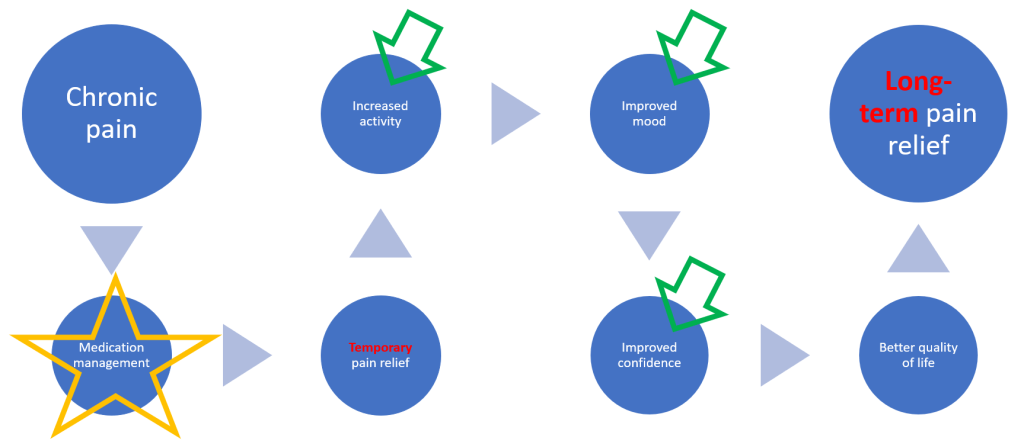
When the pain is tolerable and there is more activity, it leads to better mental and emotional health, increased life satisfaction, and improved relationships. All of these result in the release our bodies’ natural pain killers. Reliance on medication decreases. Therefore, long-term pain management does not depend on its constant use!
Educate yourself on opioids and pain with a quiz here.
To learn more about medications and pain, including the side effects of long-term use, please click here.
Different models of managing pain
 Against All Pains